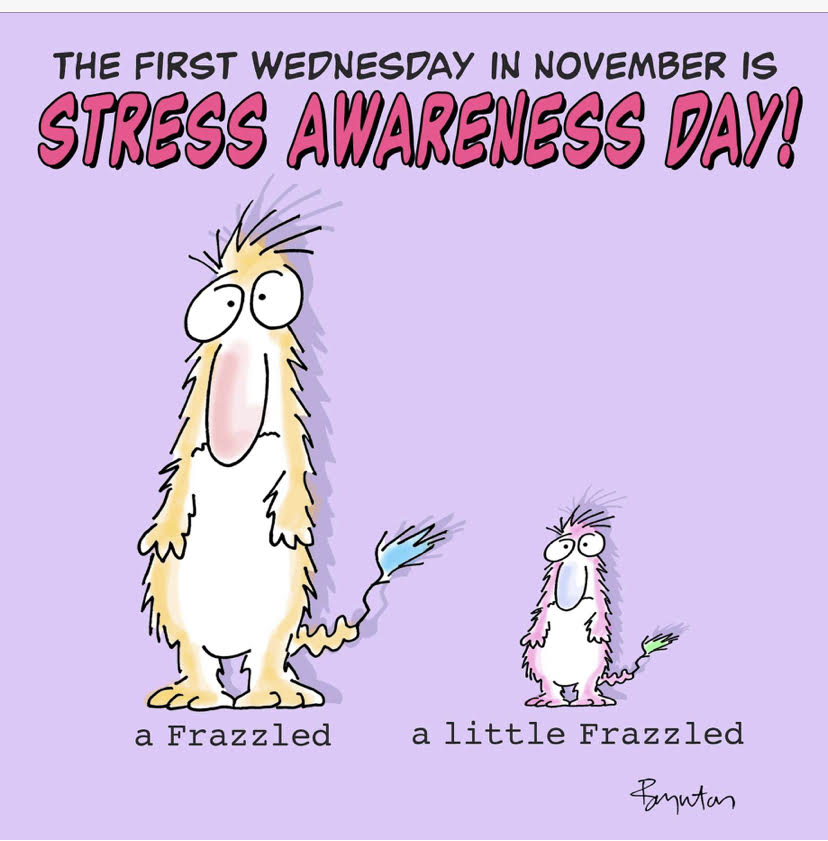
November is here and the holiday planning is in full effect. For some, Thanksgiving means they get to spend a special day with their family to express gratitude for having them in their lives and to share a delicious meal together. For others, Thanksgiving means they get to spend a stress-filled day with their family as old, unresolved conflicts re-emerge and tension fills the air. And still for others, Thanksgiving is a time to grieve those loved ones that have passed away or from whom they have found themselves estranged.
For those coping with the stress of the holidays, how can you transform
Thanksgiving Day, giving yourself what you need to feel less stressed? Here are a few things you can try:
1) A focus on the breath can be a great first step.
“If you want to conquer the anxiety of life, live in the moment, live
in the breath.” – Amit Ray
“Feelings come and go like clouds in a windy sky. Conscious breathing
is my anchor.” – Thich Nhat Hanh
– Noticing the breath: Start noticing the breath in short intervals
during routine activities, such as washing dishes, folding laundry,
shopping, showering, while sitting at your desk at work, or while
driving. Try to observe your breath for one minute. That means
breathing in and noticing the rising of your belly and chest,
breathing out and noticing the falling of your belly and chest. You
don’t have to close your eyes or change the length or speed of your
breath. This is a practice of focusing your attention on your breath
as it is.
– Mindfulness Meditation: Jon Kabat-Zinn, the founder of Mindfulness
Based Stress Reduction defines mindfulness as “awareness that arises
through paying attention, on purpose, in the present moment, non-judgmentally.”
Researchers have linked mindfulness meditation practice to reductions
in stress, anxiety, depression and pain.
To begin, find a comfortable seated position on a chair or a cushion
on the ground. Keep your back straight, but not too rigid. Close your
eyes or soften your gaze toward the floor. Notice your breath as you
breathe in and out. You will notice your mind wandering away from your
breath. This is normal. You can acknowledge/label your thought and
then gently bring the focus of your attention back to your breath.
Plan to devote 10-15 minutes each day (or more if do-able) to your
meditation practice for the best results.
– Square Breathing: For a quick calming down exercise, try “square
breathing.” For this exercise, you will breathe in through your nose
to the count of 4, hold to the count of 4, breathe out to
the count of 4 and hold it again to the count of 4 and start again.
You will do this 4 times in total.
2) Self-Care is essential! Identify what soothes and comforts you
and carve out time each day to practice self-care. Give yourself
more self-care when stressed or busy!!
Some examples of self-care strategies are:
Deep Breathing
Massage/Self-Massage
Aromatherapy/lotions
Taking a walk outdoors
Chewing gum or sucking on a candy
Stretching
Sipping a warm drink
Taking a warm bath/shower
Reading a book
Listening to music
Wearing comfortable clothing
Meditating
Painting
Working on a hobby
Watching a funny show
Calling a good friend Spending time with your “family” of friends
3) Notice your thoughts. Be kinder to yourself.
We talk to ourselves constantly throughout the day. Many of these
thoughts are focused around an event of the past that perhaps you wish
you would have handled differently or worries about future events.
Try to imagine your thoughts as clouds in a stormy sky. Acknowledge
them, then let them drift on by as new clouds drift in after. No need
to push the thoughts away or make yourself feel badly for having the
thoughts. Hold them in awareness and then gently let them go.
Have a “mantra” or a motivational phrase on deck to repeat to yourself
when you need to be your own personal cheerleader.
Some examples are:
I am strong.
I am loved.
I am doing my best.
May I know my own goodness.
This too shall pass.
4) And lastly, consider starting a gratitude journal.
Sometimes we need to break our patterns of negative thinking and
notice the things that bring joy to our lives, both big and small. Simply
list a few things that you are grateful for each day. This can be done
with paper and pen or on the notes app on your device. This is a
quick, simple act that can have a long lasting impact on your mental
and emotional health.
If the stress is so overwhelming that it is leading to depression or anxiety and impacting on your functioning at work, at home or in social situations, don’t hesitate to seek help from a mental health professional. Call 732-784-3176.
Maria Nakhleh, MSW, LCSW is a bilingual psychotherapist in private practice, who works with adolescents and adults, individuals, couples, and families. Specializing in the treatment of anxiety, depression, trauma, life transitions, and perinatal mood disorders. Various treatment modalities utilized: psychodynamic therapy, trauma-focused treatment, cognitive behavioral approaches, and mindfulness.
The information and resources contained on this website are for informational purposes only and are not intended to assess, diagnose, or treat any medical and/or mental health disease or condition. The use of this website does not imply nor establish any type of therapist-client relationship. Furthermore, the information obtained from this site should not be considered a substitute for a thorough medical and/or mental health evaluation by an appropriately credentialed and licensed professional.
 Maria Nakhleh, LCSW